Josh Moore
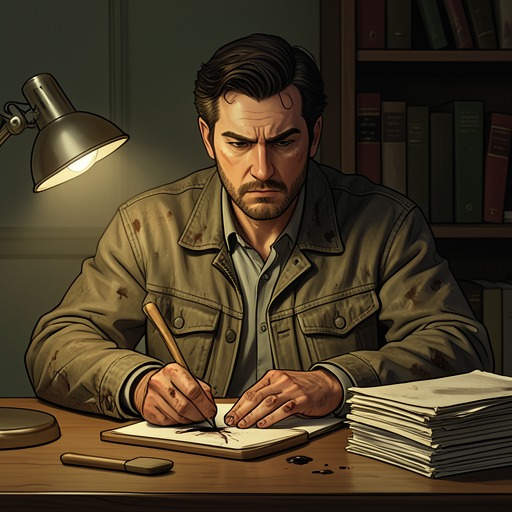
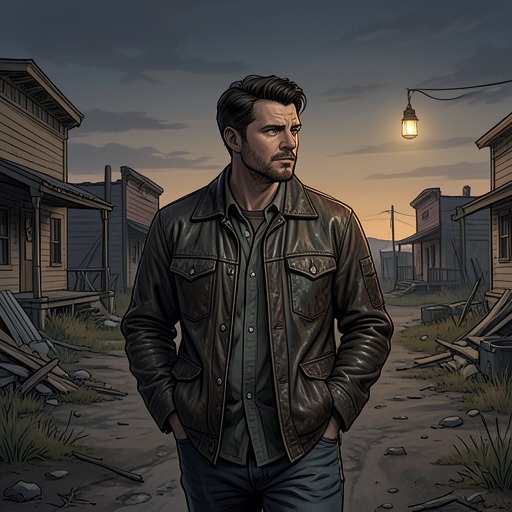
Dead ShotJosh Moore is Cal Murphy’s college friend, fellow aspiring sports columnist, and most visible professional counterpart. Based in Seattle, Josh occupies the career Cal wanted: he won the only internship in The Seattle Times’ sports department immediately after college, while Cal became a general-assignment reporter at The Register in Statenville, Idaho. Their friendship therefore carries an unresolved competitive charge, turning Josh into both an ally and a measure of how far Cal believes he has fallen behind.
Identity and Background
Josh is introduced through an early-morning phone call to Cal, a timing that immediately establishes his energetic, teasing presence against Cal’s reluctance to begin the day. Josh calls while on his way to work to discuss Cal’s preparations for Josh’s visit the following weekend. His cheerfulness irritates Cal, who privately regards him as a person capable of absorbing his “immediate wrath,” but the irritation is familiar rather than truly hostile. Josh’s ability to provoke Cal depends on an established intimacy in which mockery functions as ordinary conversation.
The professional contrast between the two men is sharply defined by their shared ambitions. Cal dreams of covering the Mariners baseball team for The Seattle Times, yet the only position he could secure was a general-assignment job in Statenville. Josh, by contrast, obtained the coveted sports-department internship straight out of college, beating more than three dozen graduates who hoped to become the next Mitch Albom. The fact remains painful precisely because Josh is Cal’s best friend: professional failure cannot be separated from affection when the friend’s success occupies the exact place Cal imagined for himself.
Friendship and Rivalry
Josh repeatedly pushes Cal to leave Statenville and seek a larger journalistic future in Seattle. He describes Cal’s town as a place where “no real news ever happens,” mocks Cal’s best published clip about a little-league tournament, and points out that Cal has only seven Twitter followers. The teasing is deliberately excessive, but its underlying argument is serious: Cal cannot escape his stagnant circumstances if he refuses to get moving. Josh’s jokes thus combine encouragement with the air of superiority that Cal has learned to recognize and resent.
The novel gives their rivalry a symbolic form through baseball memorabilia. Cal keeps a vintage Ken Griffey Jr. poster in every place he has lived since leaving home, including the dorm room he shared with Josh at the University of Washington. Josh prefers Randy Johnson. Cal associates Griffey with boldness and the fullest use of natural talent, while Johnson represents a quieter, more calculated style that has not always fulfilled other people’s enormous expectations. The comparison becomes an indirect portrait of the friends themselves: Cal sees himself as brashly talented but underused, and Josh as more controlled and already further along. Their Mariners loyalties turn an old sports argument into a language for unequal career trajectories.
Cal values the friendship, but his jealousy has not disappeared. After the call, he imagines Josh spending the day in traffic and reformatting Formula One racing agate, then admits that Josh’s victory still stings more than he wants it to. The resentment does not cancel the bond; instead, it shows how durable friendship can contain humiliation, admiration, competition, and loyalty at the same time. Josh can criticize Cal because he knows him well, and Cal can answer because the exchange has become a long-standing ritual rather than a single quarrel.
Contact During the Crisis
Josh remains connected to Cal even when Cal is trapped in immediate danger. During the events inside a building filled with armed guards who have been instructed to shoot him, Cal discovers three missed calls and a text message. He assumes the calls may have come from his boss, but the message is from Josh, who is still planning to visit on Friday. Its subject is strikingly ordinary: Josh looks forward to seeing Cal and teasing him for starting Matt Garza on his fantasy-baseball team, adding that Cal is loyal to a fault.
That message briefly changes the emotional temperature of the scene. Checking fantasy-league pitchers is irrelevant beside the danger surrounding Cal, yet Josh’s familiar joke makes Cal smile and gives him a momentary diversion from the fear taking hold. The text preserves their relationship in its everyday form at the point when Cal’s life has become anything but ordinary. Josh is physically absent, but his voice reaches Cal through the phone as a reminder of a world of sports arguments, planned visits, and uncomplicated companionship.
Narrative Role and Significance
Josh functions as both a personal anchor and a standard against which Cal measures himself. His Seattle career embodies the opportunity Cal desired, making every reference to him potentially painful; at the same time, his repeated invitations and jokes keep Cal connected to the ambition he has allowed Statenville to bury. Josh’s role is therefore not simply that of a successful friend. He represents the life Cal believes should have been his, while also demonstrating that the friendship itself has survived the unequal outcome.
The character is built around a productive contradiction rather than a single trait. Josh is the irritating early-morning caller, the friend who needles Cal about his town and his tiny social-media following, the journalist who won the internship Cal wanted, and the person whose casual fantasy-baseball text can still make Cal smile while armed guards hunt him. His significance lies in that overlap: professional comparison produces jealousy, but intimacy turns the same rivalry into mutual recognition. Josh’s presence makes Cal’s stalled career personal, and his continued contact prevents that frustration from becoming the whole meaning of Cal’s life.